Collect the context先收集背景
Public metadata, subtitles and comments provide different views of a video. CSV and JSON keep the raw material available for re-analysis.公开元数据、字幕和评论提供不同切面;CSV 和 JSON 保留原始材料,方便重新分析。
 Harry Xin
HARRY XIN / SELECTED WORK
9 projects. Different questions. One curious practice.9 个项目,不同的问题,同一份好奇。
A video-analysis toolkit that follows an idea from public creator data to a testable finding. Including the ideas that did not survive.从创作者的公开数据出发,把关于视频的直觉变成可以检验的问题,也保留那些没有成立的想法。
A pattern is a beginning. Not a formula.发现规律,是开始。不是公式。
01 / THE SECOND LOOK01 / 再看一眼
Video advice often turns one successful example into a universal rule. ViraLens compares creators and content zones to see whether a pattern still holds when the sample changes.关于视频的建议,经常把一次成功说成通用规律。ViraLens 把同一个问题放到不同创作者和分区里,观察换了样本以后,规律是否还成立。
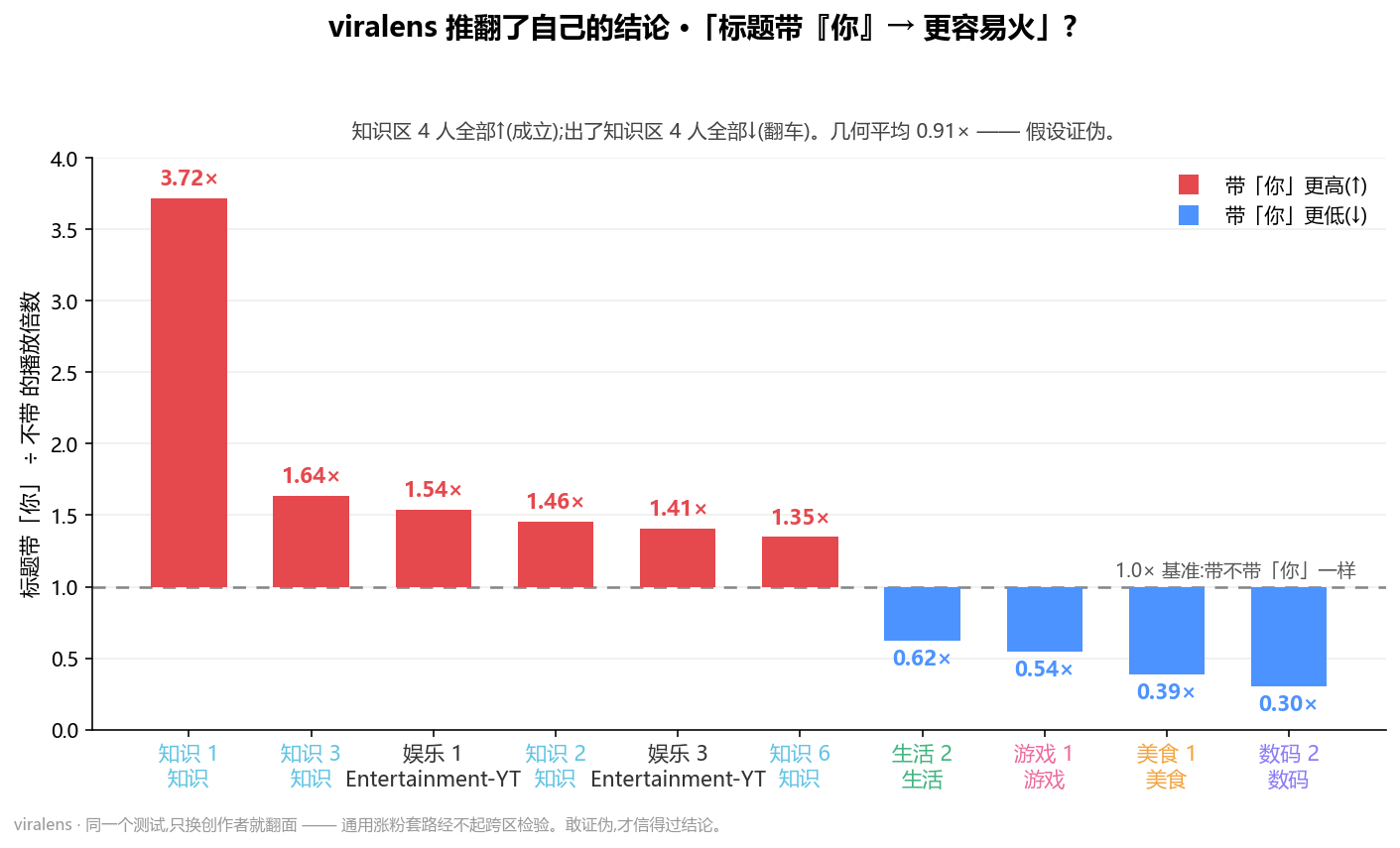
The published Bilibili sample covers 14 creators, five content zones and 549 videos. The wider title test reports four positive and four negative comparisons, with a geometric mean ratio of 0.91×.已公开的 B 站样本覆盖 14 位创作者、5 个分区、549 条视频。更宽的标题检验中,4 组正向、4 组反向,几何平均比值为 0.91×。
Public metadata, subtitles and comments provide different views of a video. CSV and JSON keep the raw material available for re-analysis.公开元数据、字幕和评论提供不同切面;CSV 和 JSON 保留原始材料,方便重新分析。
Compare a creator with their own reference set before comparing across zones. Different audiences should not be treated as one baseline.先把创作者与自己的参考样本比较,再跨分区检查。不同受众不能简单共用一个基准。
The title-addressing-you hypothesis looked promising in knowledge videos. The wider sample split in both directions. That reversal belongs in the report.标题里使用“你”的假设,在知识区一度看起来成立;放宽样本后,结果出现相反方向。这个转折同样值得写进报告。